
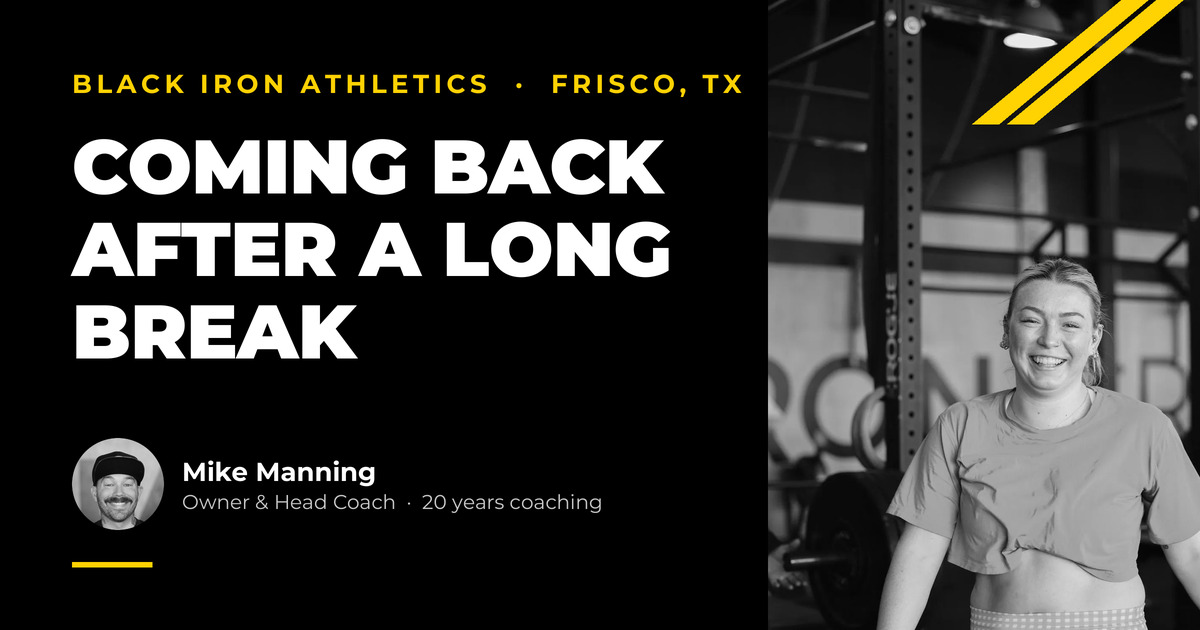
You used to work out. Maybe you were in the best shape of your life at some point. Then life happened. A job change, a new baby, an injury, a move, a pandemic — whatever it was, your fitness routine fell away. And now, months or years later, you are ready to start again but you do not know where to begin.
First, know this: you are not alone. This is one of the most common situations we see at Black Iron Athletics. People who were once active, who know what it feels like to be fit, but who are struggling to take that first step back. If that is you, this guide is for you.
Give Yourself Grace
The hardest part of coming back is often the mental battle. You remember what you used to be able to do, and comparing your current self to your past self can be paralyzing. You might feel embarrassed, frustrated, or even ashamed that you let your fitness slip.
Stop. Take a breath. That version of you existed in a different chapter of your life. Comparing yourself to who you were three years ago is not fair and it is not productive. What matters is who you are deciding to become starting today. Every single person in every gym started somewhere. And many of them had to restart at some point too.
The fact that you are even thinking about coming back means you have not given up. That is the most important thing. Give yourself credit for that.
Start Slower Than You Think
This is the most critical piece of practical advice for anyone returning to fitness: start much slower than you think you should. Your mind remembers what your body used to do, but your body is not there anymore. Trying to pick up where you left off is a recipe for injury, extreme soreness, and the kind of discouragement that makes people quit again.
In your first week or two back, focus on showing up and moving. That is it. Do not worry about intensity, weight on the bar, or keeping up with anyone else. Let your body reacquaint itself with exercise. Soreness is normal. Being unable to walk for a week is not normal — it means you went too hard too fast.
A good rule of thumb: whatever you think you can handle on your first day back, cut it in half. You can always add more next week. You cannot un-injure yourself.
Find Accountability
One of the biggest reasons people fall off their fitness routine is that they are doing it alone. When you are the only person who knows whether you made it to the gym, it becomes incredibly easy to skip. There is no one to notice, no one to ask where you were, no one to push you on the days when motivation is low.
This is where a gym community or a coach becomes invaluable. When you train with other people who know your name, who expect to see you in class, who high-five you when you show up — suddenly, showing up becomes something you look forward to rather than something you have to force yourself to do.
A coach adds another layer of accountability. They track your progress, check in when you miss sessions, and adjust your training when life gets in the way. Having someone in your corner who genuinely cares about your success changes everything.
Set Small, Achievable Goals
When you are restarting, it is tempting to set big, sweeping goals. Lose 30 pounds. Run a 5K. Get back to your college weight. These goals are fine as long-term visions, but they are terrible short-term motivators because they feel impossibly far away when you are standing at the starting line.
Instead, set goals you can achieve this week. Show up three times. Complete every warm-up. Try one new movement. Drink enough water every day. These small wins build momentum, and momentum is what carries you forward when motivation fades.
As you stack small wins week after week, you will look up one day and realize you have built a real habit. The big goals take care of themselves when you commit to the small ones.
Focus on Consistency Over Intensity
In the early weeks and months of your return, consistency is infinitely more important than intensity. Showing up three times per week at moderate effort will produce better results than showing up once a week and destroying yourself. Your body responds to regular stimulus, not occasional punishment.
This means some days your workout might feel easy. That is okay. Especially in the beginning, easy is good. Easy means you will not be so sore that you cannot come back tomorrow. Easy means you are building the habit without burning out. Easy means you are playing the long game, and the long game always wins.
As your fitness improves and the habit solidifies, you can gradually increase the intensity. But let that happen naturally over time rather than forcing it from day one.
Don’t Go It Alone
The single most impactful thing you can do when restarting your training is to find a coach who understands where you are. A good coach has seen your situation hundreds of times. They know how to bring someone back safely, how to rebuild confidence alongside strength, and how to create a plan that meets you where you are today — not where you were years ago.
At Black Iron Athletics, we have helped hundreds of people restart their training. People who had not worked out in years. People recovering from injuries. People who had tried other gyms and quit. People who were nervous and unsure. Every single one of them walked through our door with some level of doubt, and every single one of them found a community that welcomed them without judgment.
We do not care where you have been. We care where you are going. And we are here to help you get there, one step at a time.
Ready to Get Started Again?
Book your free consultation at Black Iron Athletics. No judgment, no pressure — just a conversation about where you are, where you want to be, and how we can help you get there.
Book a Free ConsultGet Tips Like This in Your Inbox
Subscribe for weekly training, nutrition, and supplement tips from the coaches at Black Iron Athletics.
Subscribe